Channel Letters That Became Landmarks People Travel For
How signage stopped being advertising — and became destinations
Most signage is treated as a cost — something that depreciates, gets replaced every few years, and exists only to attract nearby customers through basic commercial signage, outdoor advertising signs, or standard LED signboards.
But a rare category of signage does the opposite.
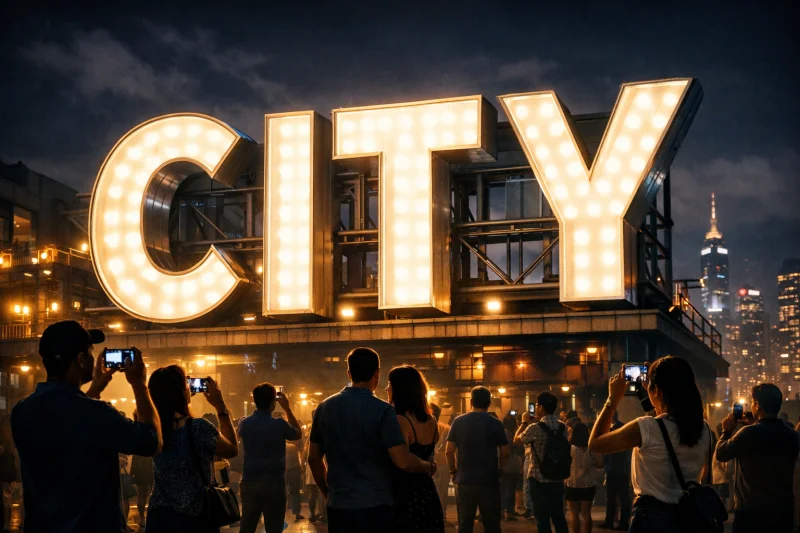
Some signs become landmarks. People don’t just notice them — they travel for them, photograph them, share them on social platforms, and build lasting cultural memories around these iconic signs, landmark signboards, and destination channel letters.
From a $4,000 roadside sign in Las Vegas to a 32-foot donut in Los Angeles, these examples prove a powerful idea for sign manufacturers, architects, developers, and branding teams:
When signage becomes iconic, it stops being an expense and becomes an appreciating asset in long-term signage branding, tourism marketing, and place-based advertising.
This blog explores real-world cases where channel letters, neon signs, illuminated signage, architectural signboards, and large-format LED displays transcended traditional advertising to become global tourism destinations, cultural landmarks, and iconic brand assets.sm sign## 1. The Gold Standard: The Las Vegas Welcome Sign
Installed in 1959 for just $4,000, the Welcome to Fabulous Las Vegas sign is one of the most powerful examples of landmark signage, iconic channel letter design, and illuminated signboard branding in the world.
Millions of tourists stop every year — often waiting in long lines — just to take a photo. The sign appears in films, TV shows, music videos, weddings, proposals, and social media feeds worldwide, making it one of the most influential tourism signage landmarks ever created.
Why it became a landmark
- Unique diamond shape and Googie-era typography uncommon in modern signboard design
- Gateway placement that maximizes outdoor advertising visibility
- Unchanged design for decades, increasing nostalgic and historical value
- No copyright protection, allowing unlimited sharing, merchandising, and organic brand amplification
- Strong emotional symbolism tied to freedom, excitement, and entertainment
Key insight: This illuminated sign functions as perpetual city branding signage without ever selling anything directly.wide, m## 2. Randy’s Donuts: The Donut You Can See From the Sky
Built in 1953 near Los Angeles International Airport, Randy’s Donuts features a massive 32-foot donut mounted on its roof — a classic example of programmatic architecture, iconic signage, and unforgettable commercial signboard design.
What started as roadside novelty signage evolved into a global branding icon, especially after its appearance in Iron Man 2, which transformed the sign into an international pop-culture and tourism signage landmark overnight.
Today:
- Tour buses stop there daily for photography
- People line up just to photograph the illuminated signboard
- Weddings and proposals happen beneath the giant donut
- The brand has expanded internationally using the sign as its core identity
Why it works
- Programmatic design where the building visually is the product
- Impossible to replicate today due to modern signage regulations and building codes
- Strategic placement near a freeway and airport flight path for maximum outdoor visibility
Key insight: One unforgettable channel letter landmark sign can outperform decades of traditional advertising.assive ## 3. When Old Signs Became Art: The Neon Museum
The Neon Museum in Las Vegas proves that historic neon signs, vintage channel letters, and illuminated signboards can become high-value tourism assets when preserved instead of demolished.
Hundreds of classic casino signs, hotel signs, and commercial signboards — once considered outdated — are now curated as cultural artifacts within a profitable signage tourism destination.
The result:
- A revenue-generating tourism attraction
- A wedding and event venue centered around iconic signage
- A photography destination for designers and travelers
- A global case study in signage preservation and branding value
Key insight:en beneath the giant donut
- The brand has expanded internationally using the sign as its core identity
Why it works
- Programmatic design where the building visually is the product
- Impossible to replicate today due to modern signage regulations and building codes
- Strategic placement near a freeway and airport flight path for maximum outdoor visibility
Key insight: One unforgettable channel letter landmark sign can outperform decades of traditional advertising spend.
3. When Old Signs Became Art: The Neon Museum
The Neon Museum in Las Vegas proves that historic neon signs, vintage channel letters, and illuminated signboards can become high-value tourism assets when preserved instead of demolished.
Hundreds of classic casino signs, hotel signs, and commercial signboards — once considered outdated — are now curated as cultural artifacts within a profitable signage tourism destination.
The result:
- A revenue-generating tourism attraction
- A wedding and event venue centered around iconic signage
- A photography destination for designers and travelers
- A global case study in signage preservation and branding value
Key insight: Old signage doesn’t lose value — it gains branding, cultural, and economic value when positioned and preserved correctly.
4. Pike Place Market: When a Sign Becomes the City
Installed in 1927, the Pike Place Market neon sign is a powerful example of architectural signage, neon branding, and place-based signboard identity.
For visitors, photographing the sign is the ritual entry point into the market. It functions as:
- A meeting point anchored by landmark signage
- A wayfinding element in urban signage design
- Visual proof of history, trust, and continuity
Key insight: When people say “meet me at the sign,” the signage has transcended branding and become urban infrastructure.
5. Piccadilly Circus: Advertising as Urban Theatre
Piccadilly Circus in London demonstrates how illuminated advertising signage, large-scale LED signboards, and architectural placement can collectively become a city landmark.
Since the early 1900s, illuminated brand signage at this junction has shaped London’s night-time identity. In 2017, the transition to a single massive.
6. Times Square: The Most Photographed Intersection on Earth
Times Square proves that signage can define an entire place.
The concentration of illuminated signs, combined with constant activity and global media events, has turned the area into a 24/7 spectacle.
People don’t visit Times Square to shop — they visit to experience the signs themselves.
Key insight: When signage becomes spectacle, the city markets itself.
The Formula: What Makes a Sign a Landmark (Iconic Signage Framework)
Across all examples of iconic signage, landmark signboards, and destination channel letters, the same principles appear repeatedly:
- Distinctive, non‑generic design
- Strategic, high‑visibility location
- Cultural meaning beyond commerce
- Long‑term commitment to preservation
- Media exposure (films, events, pop culture)
- Social‑media shareability
- Public accessibility and safety
Remove any one of these, and landmark potential drops sharply.
Why India Has No Randy’s Donuts (Yet)
India has world‑famous monuments and architecture — but very few commercial signs that people travel specifically to see.
Possible reasons:
- Rapid modernization replacing old signage
- Limited preservation efforts
- Focus on architecture over commercial design
- Lack of documentation and storytelling
This gap represents a major opportunity.
The Opportunity for Indian Brands
India can create its first globally recognized landmark signage by:
- Designing a sign meant to never be changed
- Embedding Indian cultural symbols and narratives
- Choosing a cinematic, high‑traffic location
- Planning for 50+ years, not 5
- Launching with a social and media strategy from day one
Potential connections include cricket venues, Bollywood locations, coastal highways, and heritage districts.
Business Impact: Landmark Signage vs Traditional Commercial Signage
Traditional signage:
- Depreciates
- Replaced every 10–15 years
- Local visibility only
Landmark signage:
- Appreciates over time
- Generates tourism and media value
- Becomes irreplaceable
- Advertises 24/7 for decades
What starts as commercial signage or channel letter signage can end as cultural infrastructure, tourism branding, and a long-term marketing asset.
Final Takeaway: Why Iconic Channel Letter Signage Matters
The most valuable signs in the world are not the biggest or most expensive.
They are the ones that:
- Never changed
- Meant something culturally
- Were preserved long enough for nostalgia to form
The future isn’t just making signs.
It’s creating landmarks.
For sign manufacturers and brands willing to think long‑term, landmark signage isn’t a dream — it’s a strategy.